Research
Photovoltaics
Designing antiperovskite semiconductors for efficient light absorption and charge transport.
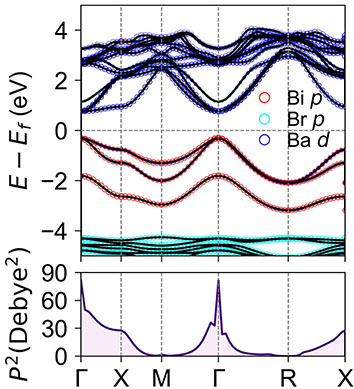
We proposed a series of design strategies, including ion type inversion, anion ordering, and atomic-position splitting, to develop a range of novel antiperovskite semiconductors. These antiperovskite materials exhibit excellent optoelectronic properties.
Related publications
Ferroelectrics and Piezoelectrics
Understanding polarization and electromechanical responses in nitride semiconductors.
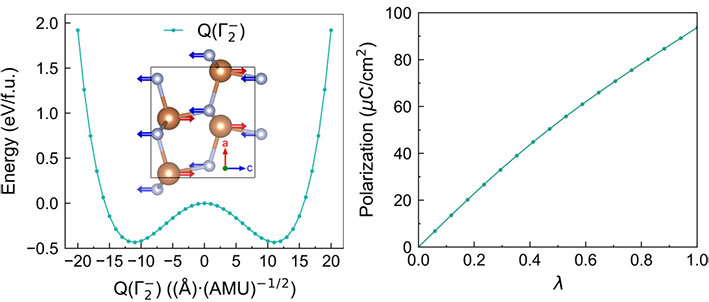
Nitride semiconductors are garnering significant attention due to their importance in communication and information technologies. Compared to their oxide counterparts, nitrogen-based semiconductors offer several advantages. Nitrogen’s moderate electronegativity and mixed ionic-covalent bonding lead to smaller band gaps in nitride semiconductors. Additionally, the high negative (positive) valence of nitrogen (metal) ions allows for the generation of large polarizations. Our current focus is on investigating the ferroelectric and piezoelectric properties of these nitride semiconductors and uncovering the underlying physical mechanisms.
Related publications
Machine Learning
Connecting material structure and properties with interpretable models and machine learning potentials.
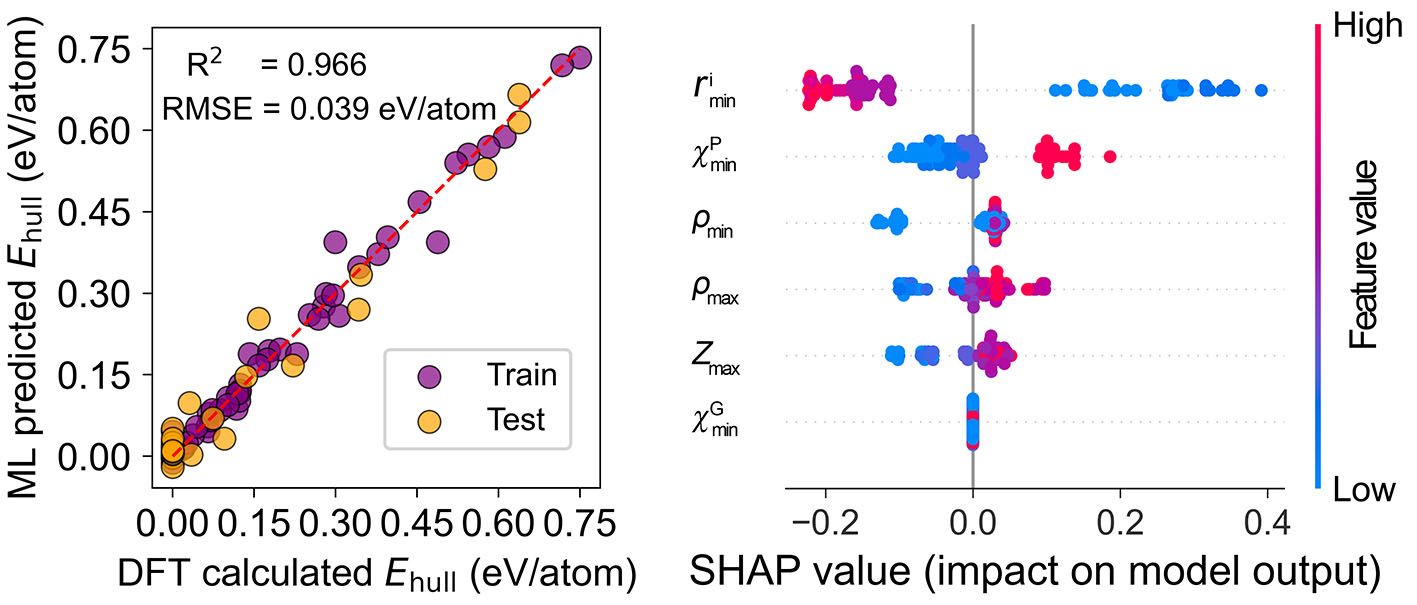
Machine learning (ML) is a powerful tool for accelerating materials discovery. We construct computational databases of material properties and apply ML techniques to extract material descriptors and build correlations between these descriptors and target properties. Our current focus is on applying ML to predict complex tensor properties, such as dielectric and piezoelectric properties in crystalline materials. In addition, we are also using machine learning potentials (MLP) to perform large-scale simulations to uncover new physical phenomena in materials.
Related publications
Discover what comes next.
Explore new materials. Develop new ideas. Join our group.